

HYROX Preparation for Beginners — How to Start on Lake Zurich
By WE.FIT
So you’ve signed up for your first HYROX race. Maybe a friend dared you. Maybe you saw the format and thought, I could do that. Maybe you’ve been looking for something more structured to train toward.
Whatever got you here — good. Now let’s make sure you actually enjoy the race, instead of surviving it.
This guide is for beginners. No fluff, no assumptions that you’ve been training for years. Just practical guidance on how to prepare for HYROX when you’re starting mostly from scratch.
Understanding What You’re Preparing For
Before you can train for something, you need to understand it clearly.
HYROX is a fitness race. The course is always the same: eight 1km runs, each followed by one functional exercise station. The stations, in order:
- SkiErg (1,000m)
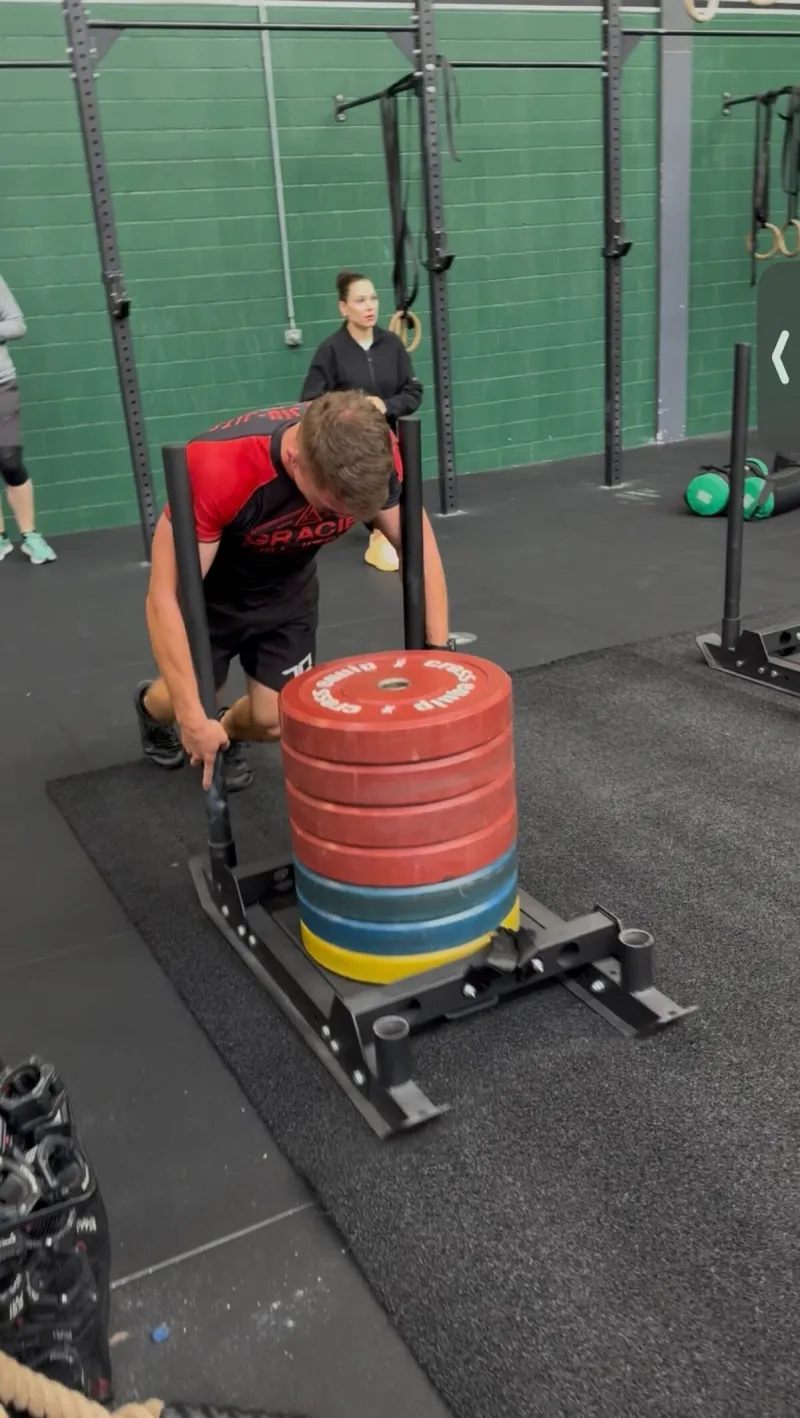
- Sled Push (50m)
- Sled Pull (50m)
- Burpee Broad Jumps (80m)
- Rowing (1,000m)
- Farmer’s Carry (200m)
- Sandbag Lunges (100m)
- Wall Balls (100 reps)
The weights are standardized by category: Open (lighter), Pro (heavier), Elite (heaviest). For your first race, Open is the right category. Don’t try to be a hero.
Total workout: 8km of running, plus the stations. Expect to be working for 60–100 minutes depending on your fitness level. If you finish in 75 minutes in your first race, that’s a solid result for a beginner.
The Three Things You Need to Develop
Preparing for HYROX comes down to building three specific qualities.
1. Aerobic Capacity (Running)
The 8km of running is cumulative. You’re not running 8km straight — you’re running 1km, doing something hard, running another 1km, doing something hard again, eight times over.
This is actually easier than a straight 8km run, because the stations break it up. But the recovery is also incomplete — you’re not resting between stations, you’re running. So you need enough aerobic base to sustain a moderate running pace for the full duration without the runs becoming your limiting factor.
What this means in practice: If you can run 5km comfortably, you’re close to ready. If running a single kilometer feels genuinely hard, spend 6–8 weeks building your running before shifting focus to HYROX-specific training.
2. Station Competency
Each station has its own movement demands. Some are mostly cardiovascular (SkiErg, rowing), some are strength-based (Sled Push/Pull, Farmer’s Carry), and some are a brutal combination of both (Wall Balls at 100 reps, Sandbag Lunges).
Technique matters. On the SkiErg, a poor pull pattern wastes energy. On Wall Balls, poor mechanics at rep 40 snowball into a complete breakdown by rep 80. You want to practice these movements before race day — ideally on the actual equipment.
What this means in practice: Train at a gym that has the equipment. Practice each station individually. Get coaching on your technique early, so bad habits don’t get baked in.
3. Running-to-Station Transitions
This is the piece most beginners underestimate.
Being able to run 1km at a comfortable pace is one thing. Being able to run 1km, hit the SkiErg immediately, complete 1,000m, and run another 1km without falling apart — that’s a different skill. The transition from cardiovascular effort (running) to muscular effort (stations) and back again repeatedly is the specific stress that HYROX training builds.
What this means in practice: Include training sessions that deliberately combine running with station work, back-to-back. Your gym should program this — it’s exactly what WE.FIT HYROX classes are built around.
A 12-Week Approach for Beginners
You don’t need a rigid periodized plan for your first race. But here’s a rough framework for how to structure 12 weeks of preparation:
Weeks 1–4: Foundation
- Build running to 2–3 sessions per week at easy pace
- Start attending HYROX classes to learn the stations
- Focus on technique over intensity — get the mechanics right
- Identify your weaknesses: are you struggling with running, strength, or breathing under load?
Weeks 5–8: Build
- Running sessions get slightly longer and include some sustained effort
- Station volumes increase — more reps, more distance
- Combined workouts: running into stations, back to running
- Start tracking times for your practice station work (so you can measure progress)
Weeks 9–11: Sharpen
- Practice full-race simulations, or portions of the race format (e.g., 4 runs + 4 stations)
- Work on pacing: figure out what run pace you can sustain across all 8 runs
- Practice your race-day nutrition and hydration plan
- Reduce overall volume slightly to arrive at the race feeling fresh
Week 12: Taper and Race
- Light training only
- Trust the work you’ve done
- Race day focus: start slower than you think you need to
Pacing: The Lesson Everyone Learns the Hard Way
Almost every first-time HYROX racer goes out too fast on the first run.
Race day adrenaline is real. The atmosphere is charged. Other people around you will be running what feels like a reasonable pace. You’ll feel great for the first two runs.
Then the sled push arrives. And then the sled pull. And by the time you get to Wall Balls, if you burned too many matches early, it’s going to be a long, miserable 100 reps.
The fix is simple but counterintuitive: start slower than feels right. Run the first kilometer at a pace that feels almost too easy. Preserve energy for the back half of the race.
Your first race is a learning experience. The time matters less than finishing well and knowing what to adjust for next time.
Training on Lake Zurich
WE.FIT in Wädenswil and Meilen is one of the best environments in the Zurich area to prepare for HYROX. The gyms have all the equipment — ski ergs, sleds, rowers, sandbags, farmer’s carry handles, wall balls — and the coaches know the race from personal experience.
HYROX classes are structured to build the specific fitness the race demands. You’ll practice transitions, develop station technique, and build the running-plus-work conditioning that race day tests.
Wädenswil is 25 minutes from Zurich HB by S-Bahn. Meilen is 20 minutes. The first class is always free.
Common Mistakes to Avoid
Skipping the running. CrossFit-fit people often underestimate how much the running matters. If you’re strong but your aerobic base is limited, the runs will break you. Don’t skip this piece of your prep.
Doing all your training alone. Preparing with a group — people who are training for the same event — makes a significant difference to consistency. You show up on days when you’d otherwise skip, because others are there.
Overtraining in the final weeks. More is not better at week 10. You can’t add fitness in the last two weeks; you can only fatigue yourself. Pull back, let your body absorb the work, and show up to the start line recovered.
Ignoring Wall Balls. 100 Wall Balls at the end of a HYROX race, after everything else, is the thing that breaks most beginners. Practice them. Get comfortable at high rep ranges. Practice breaking them into sets (e.g., 20+20+15+15+15+15) so you don’t reach failure.
You’re More Ready Than You Think
HYROX has a way of looking more intimidating from the outside than it actually is once you’re in it. The format is straightforward. The movements are learnable. The race atmosphere is supportive — people cheer for strangers.
Your first race is about finishing. About learning what the race actually feels like. About having a baseline time that you’ll spend your next training cycle improving.
Come train with us at WE.FIT. We’ll get you to the start line ready.